


Match the term to the work and the customer. Trades and one-off services: 7 days, or payment on completion for smaller jobs. Ongoing services and most B2B: 14 days. Larger corporate accounts will push for 30 or 60, and you can either accept that or price it in. Whatever you pick, put it in writing on the quote, the invoice, and a signed terms document. Include an interest clause on overdue amounts and a recovery costs clause. Terms that aren't signed are terms you'll struggle to enforce.
New Financial Year, Fresh Start: Set Up Your Debtor Management Process

Written by James Woods, Managing Director


Written by James Woods, Managing Director


At a glance
Most businesses have a debt problem because of process gaps, not effort. July is the window to fix that before trading pressure builds.
Outstanding B2B debt is growing nationally. Every extra day a debt sits unpaid, the odds of recovering the full amount tilt against you.
Payment terms that are not signed are terms you will struggle to enforce. Get the document, get the signature.
Set your escalation trigger now, in July, when you are calm. Not in March when you are emotional about a specific customer.
Table of Contents
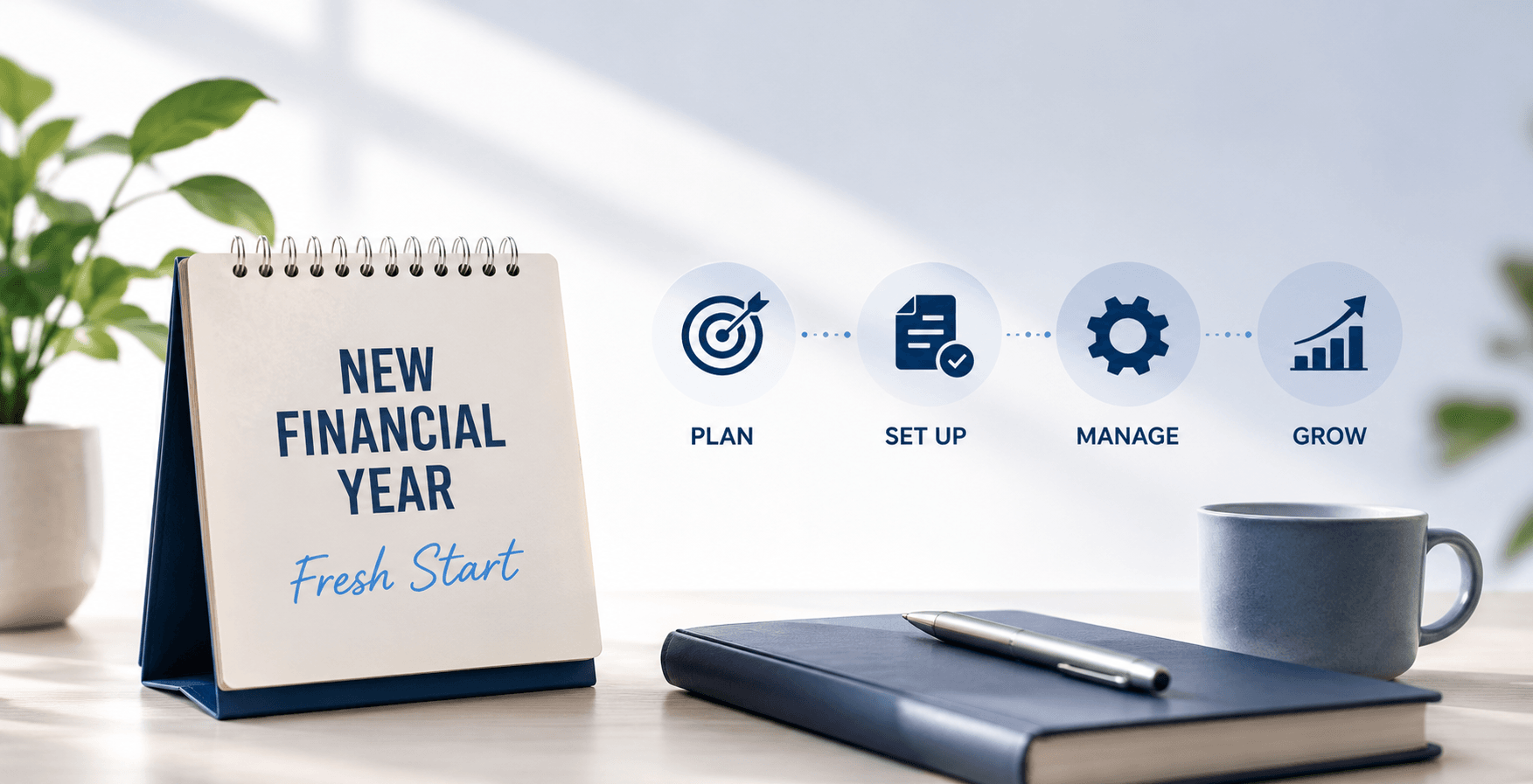
The books are closed. June's still stinging a bit. Especially the invoices that stretched into 90 days, and the two or three you've quietly written off in your head already.
July's the reset. Not because the calendar says so, but because right now you've got about six weeks of relative calm before trading pressure builds again. That's your window.
Most businesses spend the year chasing money. The ones that don't have built a system that chases for them. After 20+ years cleaning up recovery files across Australia and New Zealand, that's the pattern we see. It's almost never an effort problem. It's a process problem.
So let's fix the process.
What's poor debtor management actually costing you?
The macro picture's uncomfortable. The ABS reported private non-financial corporations were holding $368.1 billion in other accounts receivable at March 2026. That's money owed, not money in the bank. A slice of it is yours.
The ATO's own numbers tell the same story from the other end. Collectable debt sat at $52.8 billion at 30 June 2024, up $2.6 billion in a year. If the tax office is finding it harder to collect, small businesses running less structured credit control are wearing far more of that drag.
Then there's the tail risk. ASIC reported 3,556 companies entered external administration in just the first quarter of 2025–26. Some of those were your customers, or your customers' customers. Every extra day a debt sits unpaid, the odds tilt against you recovering the full amount.
Debtor days are cash flow. Write-offs are profit gone. If last financial year taught you anything, it's that "we'll chase harder next time" isn't a plan. That's where our debt recovery services come in when prevention fails. Honestly though, the goal is not to need us at all.
The Playbook
Build the process in six steps
Six steps. Do them in order. Each one closes a gap we see debts fall through every week.
Step 1: Put your payment terms in writing
If your terms live in your head or in an email footer, they don't exist. Write them once. Put them on your quotes, your invoices, and a standalone terms document customers sign before you start work.
Pick a period that matches your cash cycle. Small trades run 7 days, most services run 14, and larger B2B accounts get 30. Include the obvious ones people skip: interest on overdue amounts, recovery costs passed to the debtor, and a clause on retention of title where it applies.
Terms without signed acceptance are weaker when it's time to recover. A signed acceptance is what turns a dispute into a debt. Get the legal and compliance wording reviewed once, then reuse it forever.
Step 2: Credit-check every new account
Every new B2B account gets a credit application. Non-negotiable. It captures the trading name, ABN, directors, trade references, and gives you the legal footing to run a check.
Verify the ABN's active, look at trading history, and for anything material, pull a credit report. Ask for a director's guarantee on smaller companies with thin balance sheets. If the check comes back ordinary, that's not a "no". It's a "pro forma or 50% deposit".
Worth knowing: the ATO can now report business tax debt to credit bureaus once a business has $100,000 or more overdue by 90+ days. Unpaid tax is starting to show up where you can see it. Use it. B2B accounts carry real commercial debt collection risk, and the cheapest way to manage that is to screen before you invoice, not after.
Step 3: Invoice the day the work is done
The single biggest slippage point. Work finishes Tuesday, invoice goes out the following Monday, terms are 14 days from invoice date. You've just donated a week.
Invoice same-day. Every invoice needs the PO reference, a clear description, the due date in bold, and every payment method you accept. If the customer needs a statement, send one on the first of the month without them asking.
Clean books make this automatic. If invoicing's falling behind because you're doing everything yourself, that's a bookkeeper conversation, not a willpower conversation. Accounting and bookkeeping support pays for itself the first time an invoice goes out on the day, not the week.
Step 4: Set a follow-up cadence and stick to it
Reminders at day 7, day 14, day 30. Written down, in the calendar, owned by a specific person.
Day 7 after due date: friendly email. "Just checking this one didn't slip through." Day 14: firmer email, statement attached, phone number of who to call. Day 30: phone call first, then a written notice referencing your terms and the interest clause.
For context, the ATO's own on-time payment rate by value was 89.6% at 30 June 2024, against an 88% target. Most small businesses run well below that. A cadence closes the gap.
The point of a schedule isn't the reminders. It's that no debt drifts. This is why chasing early matters more than anything else you could get wrong.
Step 5: Decide your escalation triggers in advance
Set the trigger now, in July, when you're calm. Not in March when you're emotional about a specific customer.
The rule most of our clients settle on: Final Demand letter at day 45, handover to a recovery partner at day 60 unless there's an active, documented payment plan. No exceptions on gut feel.
Awareness matters too. There's a statutory time limit for debt collection in Australia, generally six years from when the debt became due. But the longer you wait, the harder recovery gets, and the more excuses accumulate. Read up on it so you're not caught out.
Write the triggers down. Share them with whoever runs your AR. When the trigger hits, the debt moves. That's the whole discipline.
Step 6: Choose your recovery partner while things are calm
Vet a recovery partner before you have a debt to hand over. Ask about coverage (do they work AU and NZ?), fee model (no-win-no-fee is what most reputable operators offer on straightforward matters), access (is there a portal so you can load a debt and track it?), and who you actually talk to (industry account managers who know your sector, not a call centre).
Do some due diligence. The ACCC took action in June 2026 against ARMA Group and Force Legal over more than 320,000 allegedly misleading debt enforcement notices, following complaints from over 400 customers. Not every operator is the same. Ask questions.
We've been doing this across Australia and New Zealand for more than 20 years. Have a look at the debt collectors in Australia worth partnering with and compare.
What good looks like: terms, credit app, reminder schedule
Three artefacts. Get these right and most of the process runs itself.
If you're a one-person finance function and this feels like a lot, it is. That's what small business debt collection support is built for when you're under-resourced.
When to hand a debt over, and what happens next
The trigger's the trigger. Day 60, no payment plan, no genuine dispute in writing. Debt moves.
Here's what actually happens after handover. You load the debt into the portal. Debtor details, invoice, statement, any correspondence. An account manager who knows your industry picks it up. Contact starts within days. You get updates as things move. If we recover, we take a percentage. If we don't, on no-win-no-fee matters, you don't pay a collection fee.
Set-and-forget escalation rules mean you're not making decisions on individual debts every week. The system decides. You get to run your business.
Want a read on a specific debt before you commit? The free Debt Terminator appraisal gives you an honest view on a specific debt. Recoverable, worth chasing, or write-off. No sales pitch attached.
Questions we hear every July
Set the trigger before you have a debt. Most of our clients hand over at day 60 past due, or immediately after a Final Demand goes unanswered at day 45. The exception is a live, documented payment plan the debtor is actually sticking to. If they've gone quiet, or they're promising and not paying, that's your signal. Every extra week reduces the odds and shortens the runway before statutory time limits and insolvency risks kick in.
Four levers. Invoice the day the work is done, not the week after. Make payment easy with multiple methods on every invoice. Follow up on a fixed cadence (day 7, 14, 30) rather than when you remember. Escalate on a trigger, not on emotion. Businesses that do all four typically drop DSO by two to three weeks within a quarter. The single biggest lever is same-day invoicing. Costs nothing, works.
Yes, and they're cheaper than most people think. A basic check flags obvious risks: defaults, court judgments, ABN irregularities, director history. Since the ATO started reporting business tax debt over $100,000 and 90+ days overdue to credit bureaus, checks catch more than they used to. They won't predict every failure, but they'll catch the ones with a paper trail. Combine the check with a signed credit application and a director's guarantee on smaller companies, and you've filtered most of the avoidable risk.
Credit control is everything you do before a debt goes bad. Setting terms, checking credit, invoicing, following up, escalating internally. Debt collection is what happens when credit control hasn't worked and the matter goes to a third party. One's prevention, the other's recovery. Businesses that invest in credit control need less debt collection. Same continuum, different tools and different costs at each end.
On no-win-no-fee matters, if we don't recover, you don't pay a collection commission. If we do recover, a percentage of the recovered amount is our fee, with the exact rate depending on the debt's age, size and complexity. Older, disputed or interstate matters cost more because they take more work. There may be legal disbursements on files that escalate to litigation, and those are quoted before anything happens. No surprises. Ask for the schedule upfront.
Pick a partner before you need one. Send us one debt through the Debt Terminator and we'll tell you straight whether it's worth chasing.
References
James Woods
Managing Director
James has operated businesses since his late teens including windsurfer hire (1977 – 1981), yacht charter (1990 – 2001), motor accident repairs (1984 – 1989) and debt recovery (2002 to the present). He holds a B.A. and LL.B. from Monash University and was admitted as a lawyer in 1983. He is also a Graduate of the Australian Institute of Company Directors.


Let’s recover your debts without the stress
We make debt recovery simple, fast, and results-driven. Upload your files, track progress in real-time, and only pay when we collect.


Together, we deliver complete debt solutions
From proactive receivables management through to complex legal recoveries, the eCollect Group provides an integrated, transparent, and results-driven solution — powered by technology, guided by expertise, and delivered by people who treat your business like their own.
Trusted in Australia, New Zealand & Beyond
Melbourne
03 8611 2600
Level 9, 461 Bourke Street, Melbourne VIC 3000
Sydney
02 9191 9699
Level 6, 115 Pitt Street Sydney NSW 2000
Brisbane
07 3123 4031
Level 38/71 Eagle Street Brisbane QLD 4000
Auckland
+64 9 951 8000
Spaces, level 7, 50 Albert St, Auckland CBD, Auckland 1010 NEW ZEALAND
UK - eRecoveries
erecoveries.co.ukOur eRecoveries service based in UK applying high-end technology to cover the full receivables management process for you


eCollect
Our core debt recovery and collection service, operating across Melbourne, Sydney, Brisbane, and Auckland.
E C Legal
Specialist legal support for debt and credit matters, based in Australia.
eclegal.com.aueReceivables
Designed for Australian receivables management and credit operations, uniting intelligent software with real operational expertise.
ereceivables.com.aueRecoveries
Expanding our debt recovery expertise across the United Kingdom market, supported by advanced systems, industry trained specialists and a proven no-recovery, no-charge model.
erecoveries.co.uk